The Becontree Estate remains one of the most ambitious public housing projects ever undertaken. Built between 1921 and 1935 by the London County Council, it transformed vast stretches of rural Essex into a thriving working-class community that would reshape the social and physical landscape of East London.
Vision and Origins
The estate emerged from the "homes fit for heroes" campaign following the First World War. On 18 June 1919, the London County Council resolved to build 29,000 dwellings to accommodate 145,000 people, with 24,000 of those homes at Becontree. The Housing, Town Planning, &c. Act 1919 permitted the council to build housing beyond the County of London's boundaries for the first time.
The development was intended to rehouse people from London's East End displaced by slum clearance, particularly prosperous working-class families such as factory workers and busmen. Prospective tenants underwent interviews in their homes to assess suitability, family size, domestic standards and financial resources. The first residents marvelled at having indoor toilets and private gardens—amenities many had never known.
Construction on an Unprecedented Scale
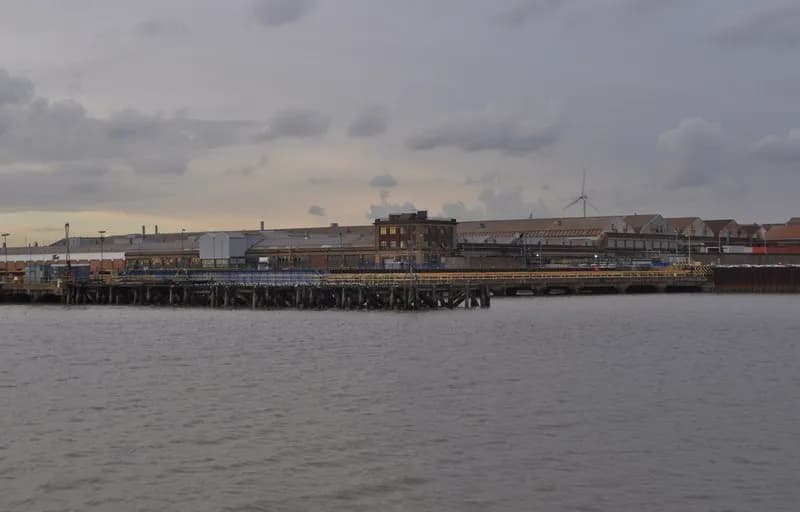
Spanning approximately 2,770 acres across what is now Barking and Dagenham, the estate required extraordinary engineering. A special railway was constructed connecting Goodmayes to a new 500-foot jetty on the Thames, where four steam cranes could unload building materials from seven barges simultaneously.
Construction progressed in phases:
- Phase I (1921–1924): 3,000 houses built in Ilford and Dagenham
- Phase II (1924–1930): 15,000 houses built primarily in Dagenham
- Phase III (1930–1935): 7,736 houses built in Barking
- Additional homes (1937): 800 further dwellings
- Heath Park (1949–1951): 600 houses built after the Second World War
By 1951, the estate comprised 27,136 houses. The official completion was marked on 13 July 1935 with the ceremonial opening of Parsloes Park by MP Christopher Addison.
Transforming the Local Landscape
The estate's impact on the area was profound. Dagenham's population exploded from 9,127 in 1911 to 89,362 by 1921—a tenfold increase that transformed a rural parish into an urban district by 1926 and a municipal borough by 1938. The rapid growth placed immense pressure on services, with school places proving particularly scarce in the early years.
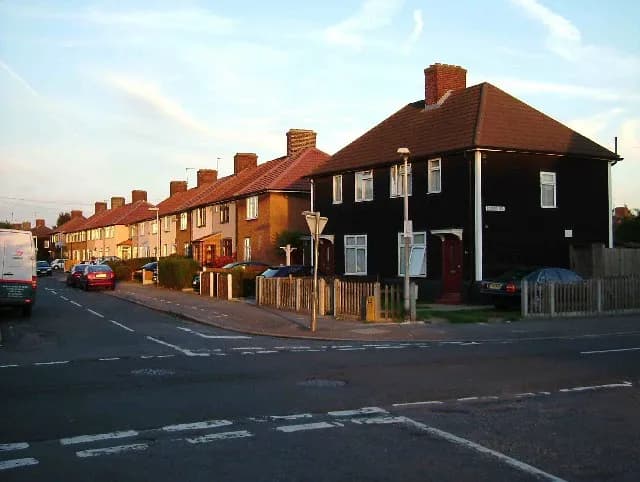
The houses were built to Tudor Walters Committee standards in a neo-Georgian style, predominantly two-storey terraces with gardens at a density of twelve houses per acre. Privet hedges—known locally as "evergreens" or "evers"—lined every pavement, maintained by council-employed gardeners. Garden competitions awarded prizes ranging from ten shillings to £20.
Daily Life on the Estate
The original design reflected interwar assumptions about working-class life. The estate was built without car parking provision—the London County Council provided only eleven garages for rent in 1937. Telephone lines were initially resisted by the council, which considered them "incongruous for residents of a subsidised housing scheme." A telephone exchange finally opened in 1954 with 1,337 lines.
Street signs prohibited cycling and ball games. Tenancy contracts contained strict conditions, including one clause stating that children born to parents living on the estate would not be housed by the London County Council. Most residents commuted to Inner London for work until industrial employers such as May & Baker and Ford Dagenham established nearby operations.
The Estate Today
Becontree remains a significant part of Barking and Dagenham, covering nine of the borough's seventeen wards. The 2011 Census recorded a population of 95,862 in Becontree ward alone, with White British residents comprising 51% of the population and Black African residents 13%. The estate has become notably multicultural, a significant shift from its original mono-cultural working-class composition.
The area retains some of the UK's most affordable housing, with median house prices in Becontree ward at £210,000 in 2014—among the lowest in Greater London. This affordability continues to attract working-class families, though many of the original two-up two-down houses now feel cramped by modern standards.
Notable Residents
The estate has produced several notable figures, including football managers Sir Alf Ramsey and Terry Venables, comedian and musician Dudley Moore, entertainer Max Bygraves, singer Sandie Shaw, and former Archbishop of Canterbury George Carey. The Dagenham Girl Pipers, formed in 1930 as the world's first female pipe band, also originated here.
A Lasting Legacy
Nearly a century after the first houses were built, Becontree Estate stands as a testament to ambitious public housing policy. It transformed not just the physical landscape of East London but created a community that, despite demographic changes and modern challenges, continues to provide affordable homes for thousands of families. The estate's history reflects both the achievements and limitations of council housing in Britain—from the genuine improvements in living standards it offered early residents to the ongoing challenges of maintaining ageing housing stock in a changing world.